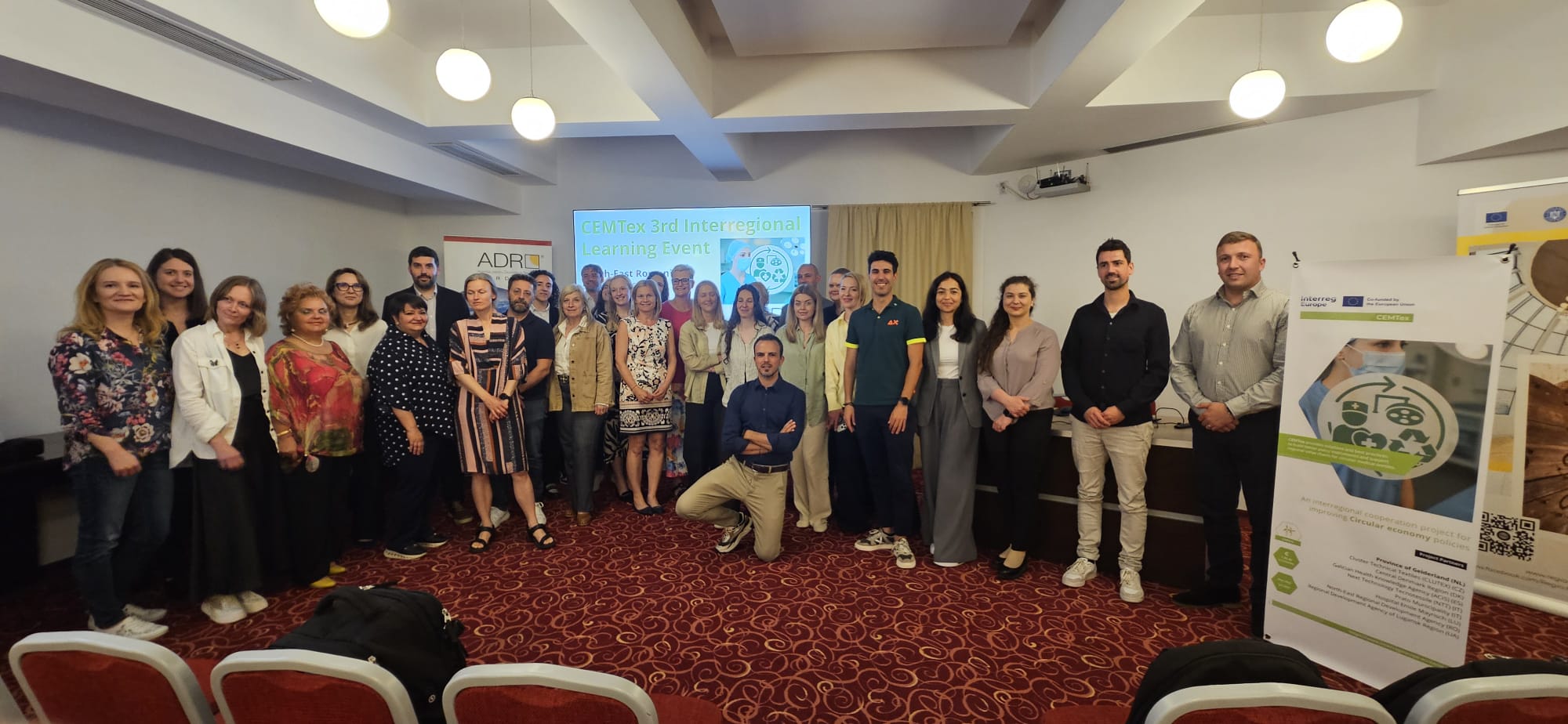
On June 9–11, 2026, the third international learning event (International Learning Event 3, ILE 3) was held in Iasi (Romania) within the framework of the INTERREG EUROPE project called CEMTex (Closing the Loop on Circular Medical Textiles), which brought together representatives of government agencies, scientists, businesses and medical institutions from different European countries to discuss the development of a circular economy in the field of medical textiles.
The first day of the event was dedicated to the implementation of the EU Waste Framework Directive, analysis of barriers in the public procurement system, the transition from single-use to reusable medical textiles in healthcare facilities, and the implementation of zero-waste models in the production and consumption of textile products.
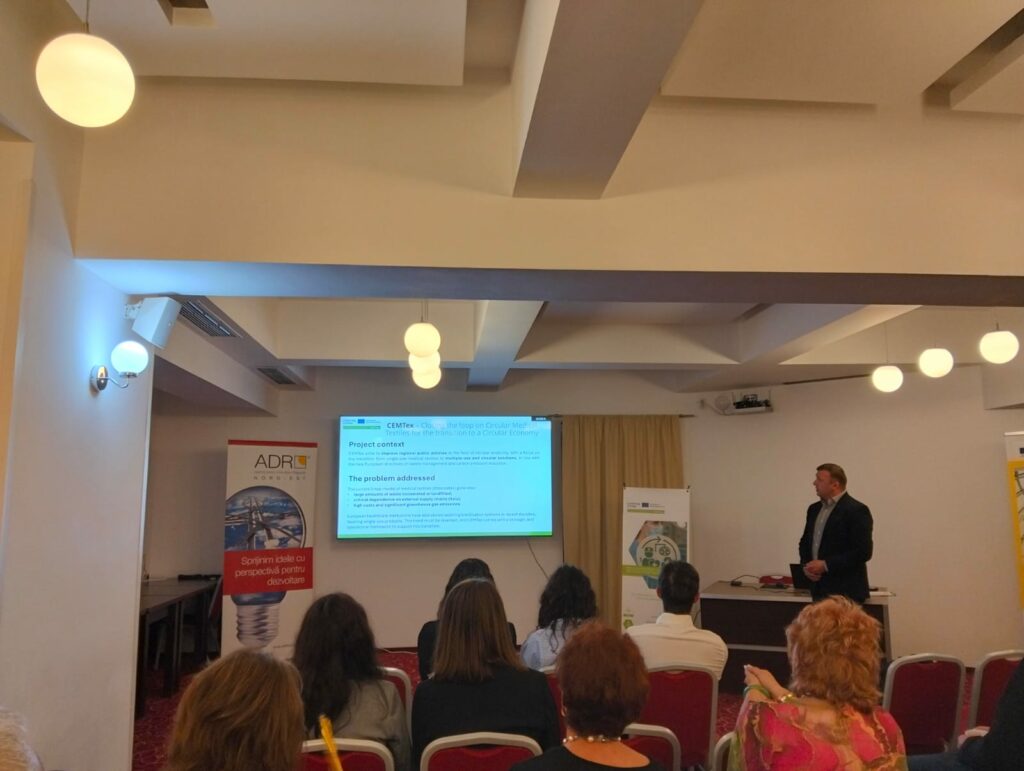
The program was opened by representatives of the Regional Development Agency of the North-Eastern Region of Romania and the Danish Technological Institute (DTI), who presented the results of a large-scale international study on the implementation of circular practices in the field of medical textiles. Based on the mapping results, six key conclusions were formulated and the launch of pilot projects was proposed for practical testing of new regulatory mechanisms aimed at closing resource cycles.
Regional innovative developments attracted particular attention of the participants. Representatives of the Technical University of Iasi presented the results of research in the field of functional textiles, in particular the development of antibacterial aroma patches, as well as the capabilities of the SMART-Tex research center. Also interesting were the cases of implementation of circular business models from the Katty Fashion company, which works on the principles of waste-free production, and the hospital in the city of Buhuşi (Romania), where digital technologies, robotic systems and AI-assistants are actively used to improve the efficiency of medical services.
In the second part of the day, a session was held dedicated to the Ukrainian experience. Representatives of the Luhansk Regional Development Agency presented the results of a study on the use of disposable and reusable medical textiles in healthcare facilities in the region, and also outlined the possibilities of transforming public procurement procedures in accordance with the European principles of sustainable development. Of particular interest to international partners was the experience of the Luhansk Regional Military Administration in coordinating the activities of displaced institutions in wartime and the activities of the Regional Development Agency, which, after the start of the full-scale invasion, reoriented its work to humanitarian support for the population, opening a shelter, a co-working space and organizing psychological, speech therapy and rehabilitation assistance for children.
Khmelnytskyi National University and EDIH CLOTEX-HUB were represented at the event by Lyudmila Bukhantsova, Associate Professor of the Department of Technology and Design of Garments, who presented the results of a scientific study on the volumes and raw material composition of textile waste from garment enterprises in the Khmelnytskyi region.
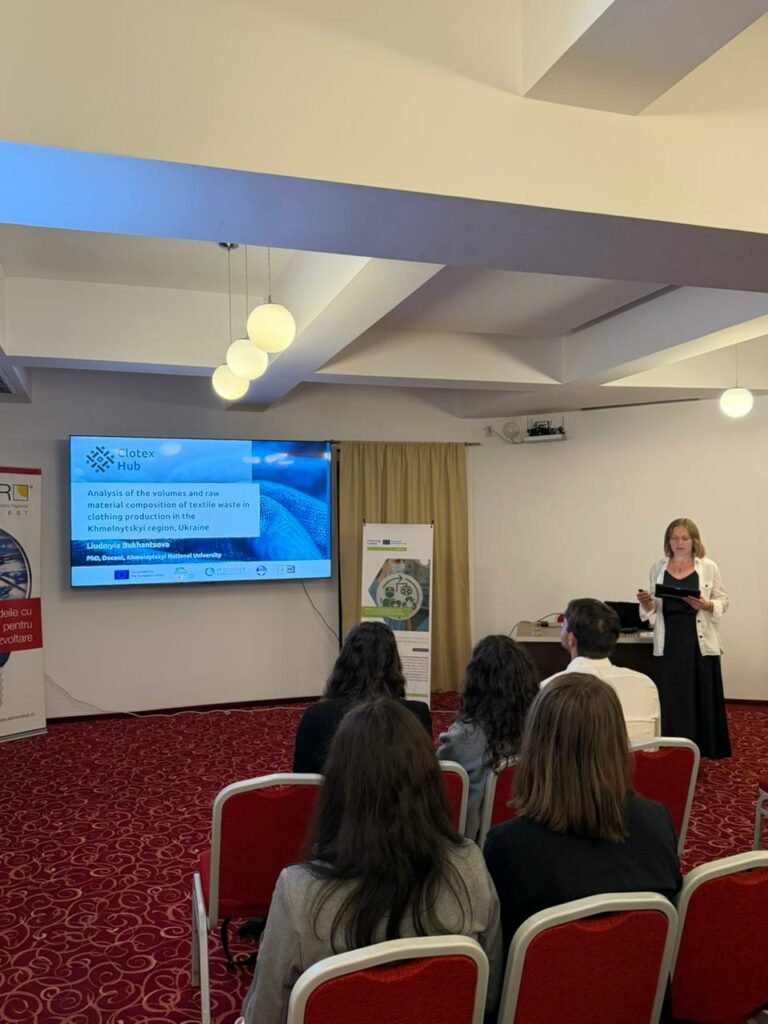
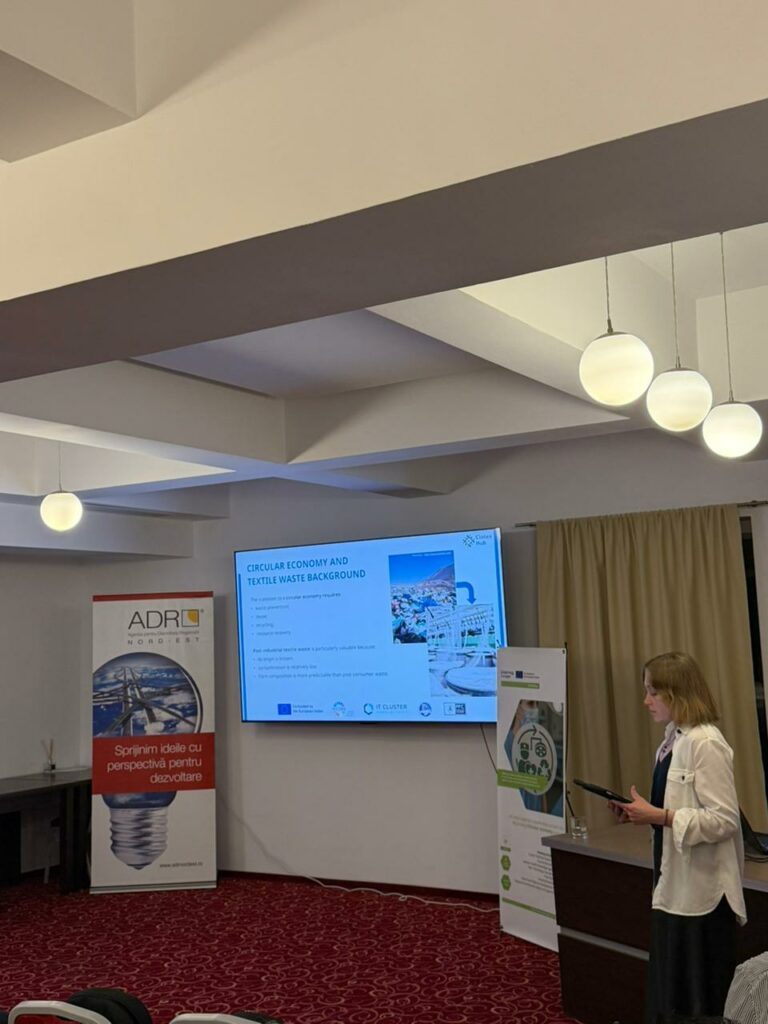
The report presented the results of a study conducted among 30 garment enterprises in the region. Particular attention was paid to the potential for recycling cotton and polyester waste, which form the bulk of garment waste. The presented results confirm the significant resource potential of Ukraine's textile waste for the development of future circular value chains at both the national and European levels.
Promising developments of Khmelnytskyi National University in the field of digitalization of the circular economy were also presented: creation of a digital map of the location of containers for collecting textile waste in Khmelnytskyi, development of artificial intelligence systems for automated sorting of textile materials, and implementation of digital tools to support circular business models.
The participants of the event noted that it is the combination of innovative technologies, scientific research, responsible procurement policy, and international cooperation that is the key to forming an effective circular textile resource management system.
During the discussions, the experience of the Ukrainian company Re:Inventex was also presented - one of the pioneers of circular processing of textile materials in Ukraine, whose activities demonstrate the real possibilities of creating closed cycles of resource use even in conditions of military challenges.
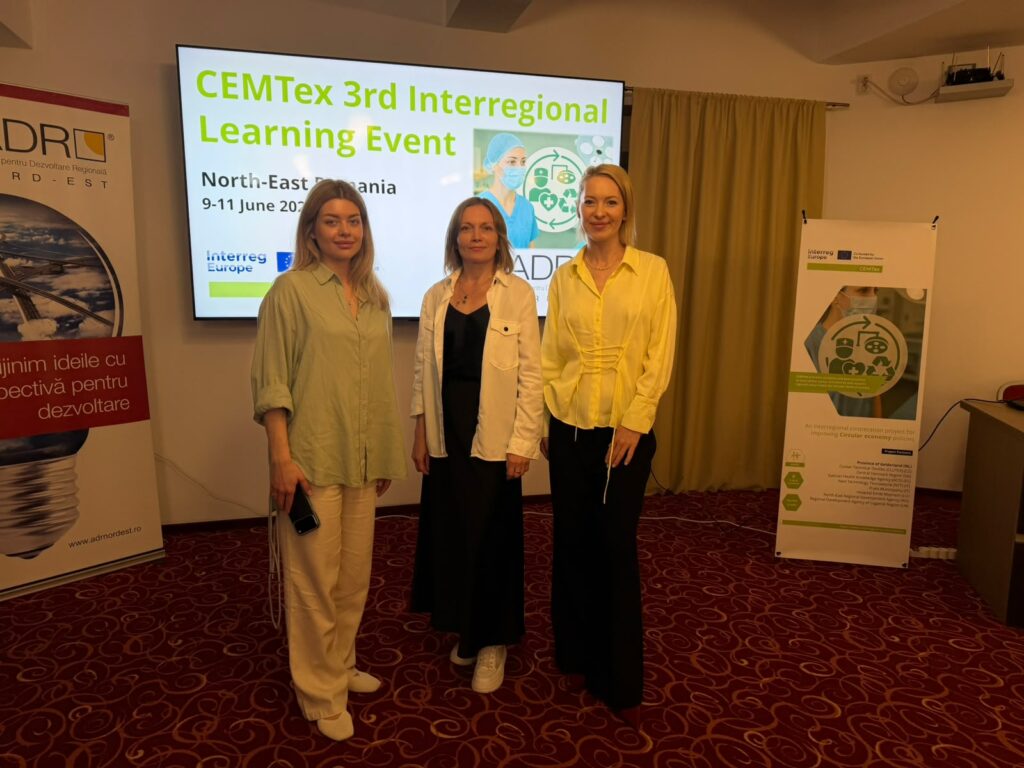
The participation of Khmelnytskyi National University in the CEMTex project confirms the university's active integration into the European scientific and innovative space and contributes to the development of international cooperation in the field of circular economy, sustainable textile production, digital technologies and green innovations. The results obtained and established partnerships create new opportunities for the implementation of joint research projects aimed at the development of the modern textile industry of Ukraine in accordance with European standards of sustainable development.
The material was prepared based on the results of the international training event CEMTex by Lyudmila Bukhantsova, Associate Professor of the Department of Technology and Design of Garments of KhNU.
 EN
EN  UK
UK